
It’s a mistake to only contact your customers using one channel. Many of the clients we speak to refrain from a multichannel approach because they’re worried about overwhelming and annoying their customers.
The truth is your customers do want to hear from you. They wouldn’t have given you their contact info if they didn’t. Some prefer SMS and others Email, the trick is to use a mix of channels so that you contact them on the channel which works best for them that day.
We are Email Kong, a dedicated Klaviyo agency that has built multichannel strategies and systems for over 160 DTC brands in industries ranging from skincare to homeware.
In this article we are going to show you how we build multichannel strategies for our clients on Klaviyo. We’ll walk through the channels available to you and how to use them together to achieve your business goals.
Klaviyo Gives You Six Channels And Most Brands Use One
Open the channels menu in your Klaviyo account and you get six options:
- SMS
- RCS for Business
- Mobile push
- and social.
Almost every DTC brand we audit sends emails and nothing else. That is the usual starting point when we take over a Klaviyo CRM build.
A multichannel strategy is therefore a decision about which of the remaining five channels to switch on and in what order.
We can’t get around the fact that when done right, Email will be your highest performing sales channel. We've seen 46% of total revenue come from Klaviyo at KittySpout and 32% at Dense Hair Experts — figures no paid channel gets close to at that margin.
Email is perfect for contacting new and existing customers with offers they find relevant. But more than that. Email is expected. If you’re the same as me, the first thing you do after making a purchase is look for the order confirmation in my inbox.
Another great thing about email is that you have a large canvas to work with to provide text and images. Along with social, is it the only channel on this list which you can use to educate your clients. Such a resource at the price point email provides is unbeatable.
SMS
Number two in any multichannel strategy has to be SMS, for the simple reason that it allows you to reach every handset in the market.
Unlike its less sexy cousins WhatsApp and push notifications, no prior app needs to be downloaded by your customers, removing one friction point to contact them.
When a customer or sales prospect provides you with their phone number, you should treat that person as a qualified lead. Providing a phone number is a much bigger commitment than providing an email address.
It’s also more intimate. Customers don’t provide phone numbers unless they want you to contact them, use this knowledge when building automated flows into your multichannel marketing.
Very similar to SMS above it, WhatsApp provides a way to message your customers' smartphones directly.
As we’ve explained, SMS comes with a bigger reach and less barrier to entry. Having said that, WhatsApp still has over 3 Billion active monthly users and reaches 90% of UK adults.
Mobile Push Notifications
Push notifications are confined to a smartphone app, so if your brand doesn’t have an app right now this channel will not be available to you.
If you are fortunate to have an app, then you can use this to send messages to your downloaders. In my experience, push notifications are considered less intimate/intrusive than SMS or WhatsApp.
It's fine to send multiple push notifications per day, expected even. Whereas with SMS and WhatsApp multiple sales and promotional messages a day would be considered spam.
You can also consider mobile app subscribers as some of your most loyal brand advocates. Due to the fact they’ve shown effort and commitment to your brand by taking the effort to download your app.
Rich Communication Services (RCS) for business
RCS is the standard replacing SMS. It runs in the phone's default messaging app. That means Google Messages on Android and Apple Messages since iOS 18. The business version is called RCS Business Messaging.
It gives brands what SMS never had:
- Verified sender name and logo instead
- Images and tappable buttons
- Read receipts
It's still a growing channel. Cloud communications platform Infobip, which carries business messaging traffic at scale, reports that RCS traffic grew 550% in 2024 after a 358% rise the year before, with a projected reach of 3.8 billion users by the end of 2026.
Social Now Feeds The Same Customer Profile As Your Email List
Social has stopped being a broadcast channel here. In August 2026 Klaviyo shipped a Social Insights Analyst. It reads Instagram content performance and surfaces top creators and themes so you can act on them across your other channels.
That changes what social does in a retention stack.
Engagement now writes onto the same customer profile your flows read from, so a creator whose post converts becomes a segment you can message.
When to use SMS in multichannel strategies
The Money Is In The Overlap, Not The Extra Reach
Revenue from a second channel comes from people already on your first list. Attentive puts a figure on it in its 2025 email and SMS orchestration guide: "subscribers engaged through both email and SMS are 2.0x–2.8x more valuable from a revenue perspective than single-channel subscribers".
Read that carefully. It inverts how most brands size the opportunity. Gains concentrate in the overlap between two lists. A subscriber reachable twice is reached at two moments inside one buying decision, so the channels compound on that one person.
Chasing people email cannot reach means working the thin part of the curve. Build your second channel to overlap the first list instead.
A Second Channel Should Let You Send Less, Not More
Dual-channel subscribers convert faster, which means brands can reduce send frequency and still achieve its campaign goals.
Faster conversion shortens the sequence needed to close, so fewer messages are required per outcome.
Here’s a simple rule of thumb for checking your multichannel success: if your total send count rose when SMS went live, it was added as extra reach. If it fell while revenue held, it was added as a faster path.
Under One Buyer In A Hundred Giving A Number Means You Are Not Ready
SMS platform Postscript publishes percentile benchmarks across its merchant base, and its January 2026 SMS acquisition rate figures read: "Median (50th percentile): ~1.06% / 75th percentile: ~2.32% / 90th percentile: ~5.22%. Around 1% is average. Above 2% is strong."
Read against your own store, about one buyer in a hundred is the middle of the market. That number is a denominator problem: every downstream sequence is capped by how many profiles are eligible to enter it. A brand sitting under that line is optimizing copy for an audience that does not exist yet, and next month's work is capture placement.
Build The Post-Purchase Flow First: A Worked Example Across Email And Text
Here is the sequence we build first, in full. Its shape explains every setting that follows.
Post-Purchase Is Where The Flow Multiple Moves Most
Across every client result we have published, the post-purchase flow multiple moved in every single account. Our KittySpout rebuild is the clearest case: post-purchase flow revenue up 1.6x, returning-customer revenue up 146%. That consistency is why a second channel goes here before anywhere else.
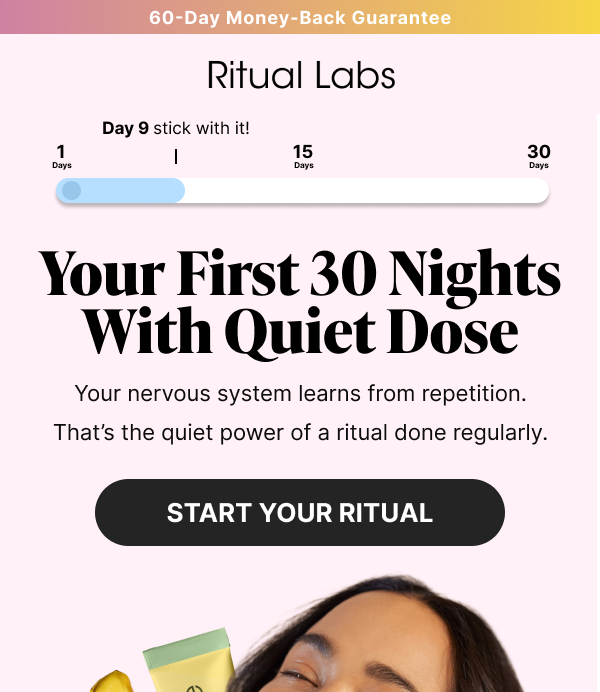

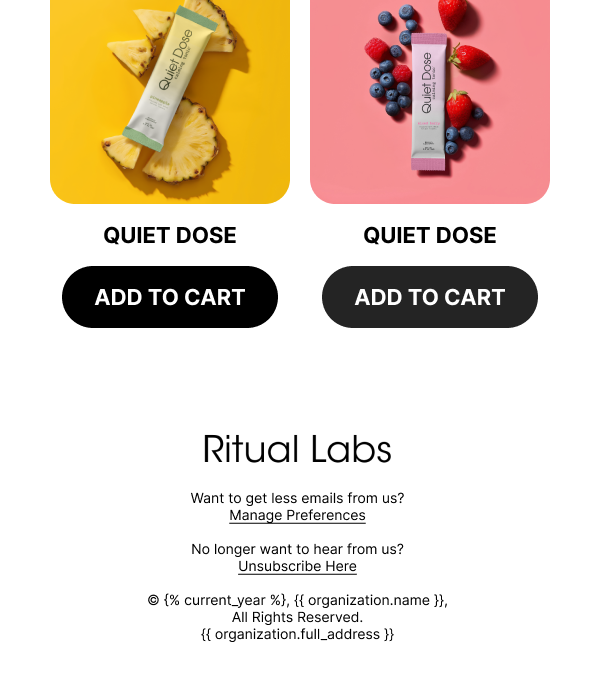
A real post-purchase campaign we built for Ritual Labs.
Post-purchase works because it reaches somebody who has just decided to trust you, so a text lands against intent that already exists. Point your first texts at buyers. The single-channel version of this sequence is a separate build, and we have written up how we structure post-purchase emails on their own. What follows is only the part that changes once a second channel is involved.
One Flow Takes One Trigger, So Branch On Consent
Most builds stall here, on a genuine platform constraint. A Klaviyo flow accepts only one starting trigger.
Zac Fromson is co-founder of ecommerce growth agency Lilo Social and a 2026 Klaviyo Champion. Answering a merchant in the Klaviyo Community in July 2025, he was direct. Klaviyo does not support a single flow with multiple starting triggers, he explained, so you cannot start a flow from either an email or an SMS subscription. You have to choose one.
Our working pattern is one flow triggered on the order, with a conditional split checking whether the profile holds SMS consent. That consent is a separate permission on its own property. Holding an email address grants you nothing on the phone.
Profiles with consent take the branch containing texts. Profiles without it stay on the email-only path and get an SMS opt-in prompt. Two parallel single-channel flows look easier on day one. They give you two reporting surfaces for one journey and no way to stop both firing at once. That same branch structure then applies to the abandoned cart flow once post-purchase is proven.
The Thirty And Sixty Day Windows Decide The Spacing
The spacing between messages comes from the product, never from a calendar. We build post-purchase sequences around the 30 and 60 day retention windows. On Dense Hair Experts the 60-day window was exactly where subscribers had been disengaging. Rebuilding around it lifted returning-customer revenue 59% inside 90 days.
We anchor the sequence to when a second order is realistically won for that product. Then the messages are spaced inside it.
For a consumable on a monthly cycle, the reorder prompt lands before the first one runs out. For a considered purchase, the 30-day message is about getting value from what they bought. Your 60-day message is the one that asks for anything. A touchpoint placed after the window has closed meets a decision already made. Where inside the day each message lands is a separate question, and we cover send times elsewhere.
The Text Fires Only Where The Email Did Not Land
Every text in this sequence is conditional on the email before it going unopened. Klaviyo's documentation for omnichannel campaigns describes the mechanic directly. Send an email to your full audience, then create an SMS follow-up targeting only people who did not open it.
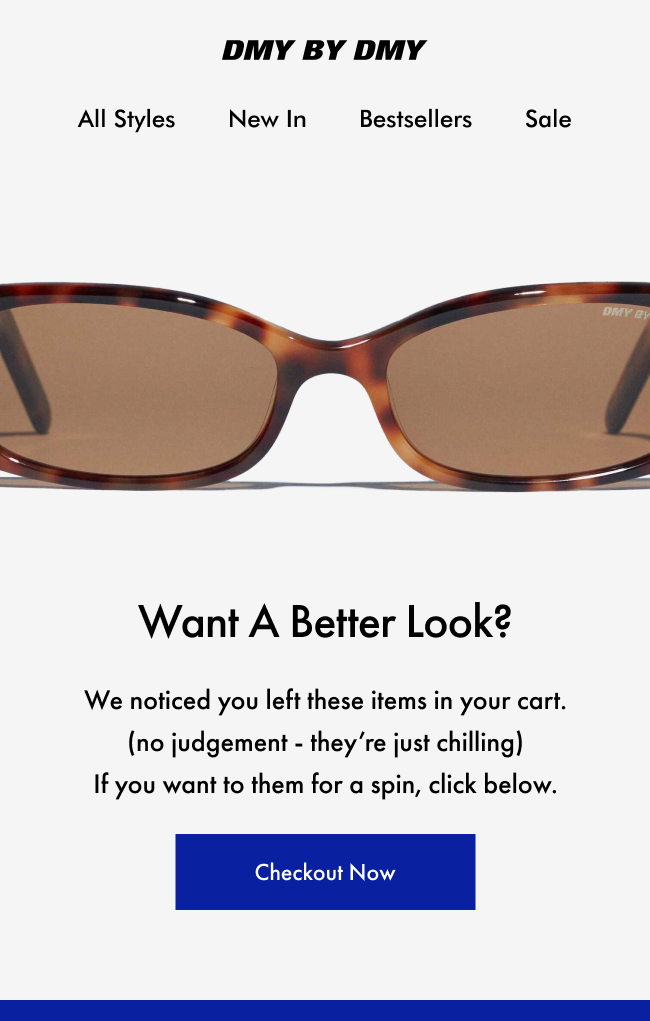
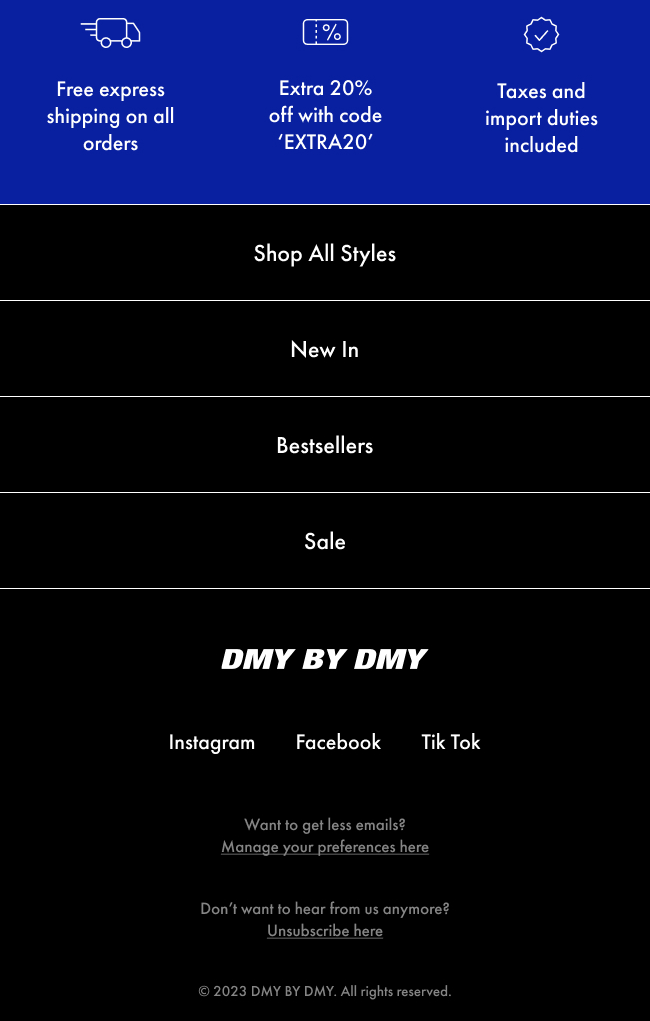
A real abandoned-cart campaign we built for DMY BY DMY.
Applied inside a flow, that condition keeps your second channel additive. It removes people the first channel already reached, so the text speaks only where the email was silent. An unconditional follow-up is a second blast wearing a different font. A conditional one is a second channel.
Set The Attribution Model Before You Send Anything
Now the settings that hold a multichannel strategy together. We open with this one on every build, for the reason in this article's first paragraph.
Klaviyo Credits The Last Message, Not The One That Did The Persuading
Klaviyo's attribution documentation is blunt about the default. "By default, Klaviyo uses a co-operative last touch attribution model and Advanced KDP and Marketing Analytics customers can update their attribution model type."
Its worked example is the part to sit with. Klaviyo walks through a $100 order placed after two emails and one text. Because that text was the final touchpoint before the conversion, Klaviyo's documentation shows it receiving all $100 of attributed value, even though the emails may have played a role in the decision.
Last touch resolves to one winner per conversion. Whichever channel fires nearest the purchase is structurally most likely to be that winner. Your closing texts will take credit your emails earned. Nothing was cannibalized. Credit moved.
The Model That Shows The Real Split Is A Paid Add-On
Klaviyo does offer a linear model, splitting credit evenly. According to Klaviyo's attribution documentation, that $100 order then splits equally across all three touchpoints, giving each of them about $33 of attributed value. That is a far more honest picture of a multichannel strategy in production.
A catch sits in the same documentation. Klaviyo excludes Advanced KDP and Marketing Analytics from its standard marketing application, and states that a subscription is required to access the associated functionality. So the model that would show what each channel contributed sits behind a paid tier most accounts are not on.
Budget for it as part of going multichannel, or accept that the split stays invisible. One practical note if you switch: the change takes up to 36 hours to apply. Your first day of numbers afterwards is not comparable to anything.
Two Platforms Will Both Claim The Same Order
An opposite error appears when email and SMS sit on separate platforms. Each tool sees only its own touches, and applies its own attribution window to them, which means an order falling inside both windows gets counted once by each of them.
Those windows differ, which makes the numbers irreconcilable. Attentive publishes its own settings, and the asymmetry sits in the view window. A click counts for five days on both channels. A view counts for one day on SMS and five on email: "Default window for SMS is 5-day click, 1-day view. Default window for email is 5-day click, 5-day view."
Email is therefore credited for a view four days longer than a text is, on the same purchase, in the same week.
Add two dashboards built on settings like those and you report more owned-channel revenue than the business made. The error compounds without warning, because neither tool is wrong on its own terms and neither can see the other. Reconcile both against the store's order total, never against each other. If your owned-channel total exceeds what the store banked, you have found it.
Cap The Messages One Subscriber Gets Before You Add Campaigns
Once flows are live there is volume to govern. Klaviyo governs less of it than people assume.
Smart Sending Windows Run Separately On Email And Text
Klaviyo's Smart Sending suppresses repeat messages inside a channel. Its help center documentation spells out the limit: "each channel has a separate default Smart Sending window: 16 hours for email, 24 hours for SMS, and 24 hours for push notifications, and these windows operate independently from one another".
Independently is the load-bearing word. When someone receives a message in a channel, further marketing messages in that same channel are skipped until the window expires. Other channels stay blind to it.
A subscriber can take an email at nine, a text at two and a push at six. Every one of those sends is inside policy. Worth knowing before you rely on it: changes to a Smart Sending window are not retroactive, so anyone already inside the old window stays there until it expires.
Count Messages Per Person Per Week, Not Per Channel
Because the platform counts per channel, your system has to count per person. What protects a list is total messages one subscriber receives in a week, across everything. Our full working on email send frequency sets the single-channel baseline this ceiling has to contain.
To check whether your own ceiling holds, Postscript's benchmark set gives you a reference point on list health: "Median retention rate: ~93.1% / 75th percentile: ~96.9% / 90th percentile: ~99.1%. If you retain over 90% of subscribers in their first 30 days, your program is healthy."
On cadence Postscript's read is more permissive than you might expect. Its merchant base sends about 2 messages per month per subscriber at the median, and high-performing brands push to 4-6 monthly without harming retention. One condition is attached: only where the messaging is relevant and segmented.
That condition carries the weight. Higher frequency survives when the targeting is tight enough to justify it. Your ceiling is therefore set by how well you segment, not by how much you want to send.
Only Then Let The Channel Into The Campaign Calendar
Promotional sending comes last in a multichannel strategy, and the reason is blast radius. A flow reaches whoever triggered it, so an error reaches a handful of people over days. A campaign reaches the whole segment at once, so the identical error reaches all of them inside an hour. That asymmetry is the argument for sequencing, and it is also why the platform treats the two halves so differently.
Campaigns Went Omnichannel In September 2025, Flows Did Not
When the flows have proved the channel, the tooling for promotions is good. Klaviyo announced in September 2025 that its "Omnichannel Campaign Builder is now available for all Klaviyo customers". It described a single campaign canvas for planning and measuring multi-day campaigns. One surface now reports email, SMS, WhatsApp and mobile push together.
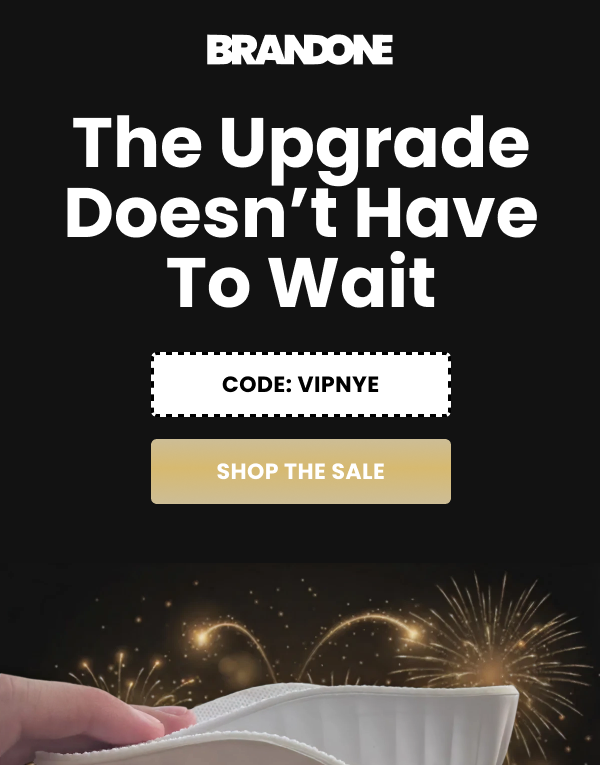
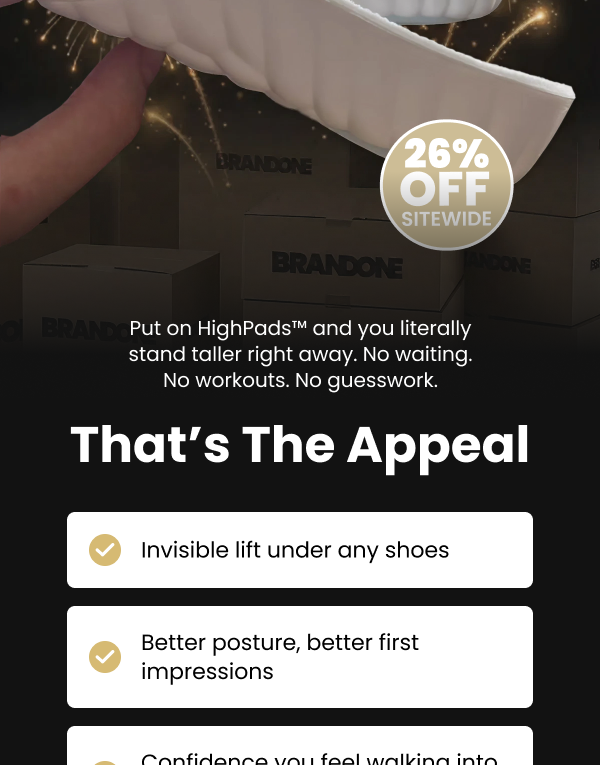
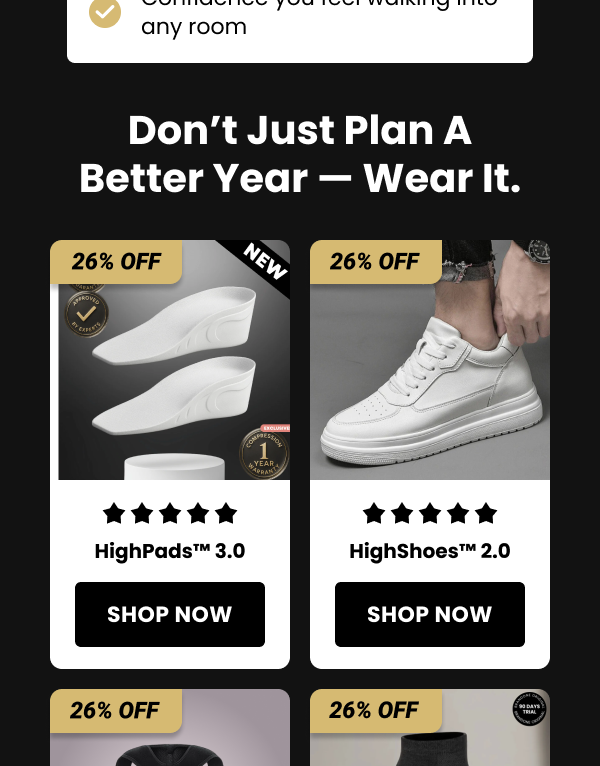
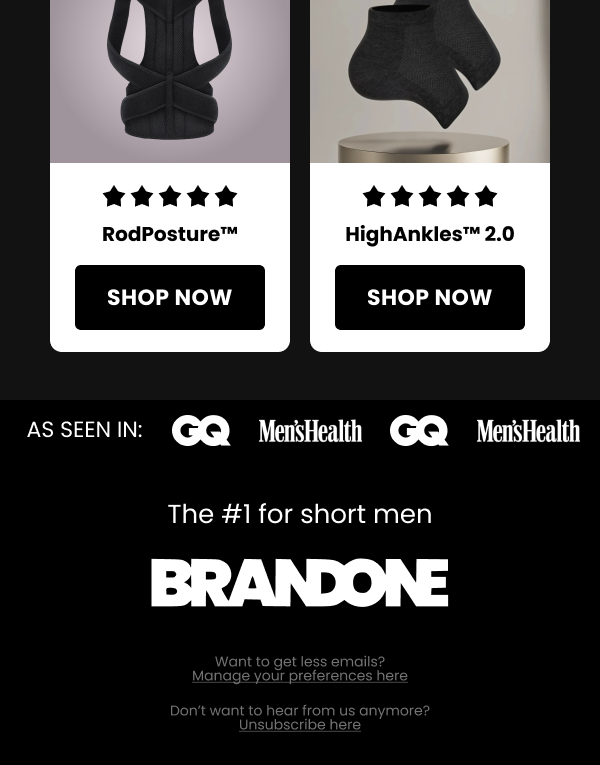
A real promotional campaign we built for BRANDONE.
Notice the asymmetry, because it explains the shape of this whole build. Campaigns are planned centrally against a segment, which made them the tractable problem to unify. Flows are triggered per profile and were left single-trigger, which is why the automated half of any multichannel program still has to be branched by hand.
Practitioners saw that split coming before the tooling admitted it. Raquel Caticha, a Klaviyo Champion at Hazel Village, raised the same point in the Klaviyo Community back in July 2025, while helping a merchant who wanted one welcome journey across both channels. Practitioners spotted the split before the tooling closed it, and it still has not closed: plan your flows on the assumption that you are the integration layer.
Automatic Channel Affinity Has Not Shipped Yet
Klaviyo's own announcement files this one under coming soon. "AI-powered channel affinity, exit conditions, and conditional splits will route customers down the right campaign paths automatically".
Coming soon means not yet. Until it ships, which channel each customer hears from is a decision you make, encoded in the conditional splits you build. Do not plan a program that assumes the platform will choose for you.
What A Klaviyo Audit Finds When Two Channels Are Fighting
Everything above comes down to three decisions that constrain each other. Your ceiling limits what the sequence is able to do, and your sequence then determines how much volume that ceiling has to absorb. Sitting underneath both of them, your attribution model decides whether any of it looks like it worked.
We hold those three together inside our 4-Engine LTV Multiplier System™, where channel choice belongs to retention strategy rather than to campaigns. Split them across three owners instead and you get locally sensible choices that fight in production. That is most of what we find.
Our free Klaviyo audit covers flow performance and gaps across welcome, abandoned cart, post-purchase and winback. It also checks campaign attribution and deliverability. Then it looks at list hygiene, segmentation, template rendering and the coordination between your SMS and email.
That final item is what this article has been about. It is a named, checkable part of the audit with a defined output. If you would rather work through it yourself first, we have published how we run an email marketing audit.
Two questions always follow the audit. On cost, a second channel is a headcount decision before it is a software one: we put a comparable in-house team of designer, copywriter, Klaviyo specialist and CRM manager at $9,000 to $22,000 a month.
On timing, we measure every build against our 8-Week ROI Timeline™, which runs from foundation in week one through to a retention engine by week eight. Judge a second channel on that arc, not on its first fortnight of sends.
Neither answer means much without knowing what your account is doing today. To find out whether your two channels are compounding or competing, get your free Klaviyo audit and we will tell you which it is.