
The world’s most successful businesses understand that the key to sustained profitability is recurring revenue from your existing customers.
Marketing spend needed to reengage a customer who has already purchased costs considerably less than it does to acquire a new customer.
You have landed on the Email Kong website. We are a DTC retention agency that builds systems to keep customers coming back for the 160+ brands in our stable.
This guide reveals the customer retention strategies and frameworks we rely on everyday for our agency clients. Scroll down to learn our secrets.
Measure Your Repeat Purchase Rate Before Choosing A Strategy
Pull two numbers out of your store before you touch a flow. They tell you where in the lifecycle customers stop buying, and they decide which strategy is even worth building.
Work Out What Share Of Your Customers Buy Twice
Take everyone who placed a first order in a given month, then count how many have since placed a second. That percentage is your repeat purchase rate, and every later decision hangs off it.
Run that calculation every month. A single cohort tells you where you are, and a run of them tells you whether anything you changed is working.
Measure How Long Customers Take To Place A Second Order
Export the interval between each customer's first and second order, then take the median. Repeat rate tells you how many come back; this tells you when, and it sets every delay you will configure later. One caution on that calculation: use the median, because a handful of subscription customers reordering weekly drags a mean somewhere useless.
Sixty days is the interval worth watching, short enough to act on and long enough to be real. Three operators landed on it independently in one thread, where u/thekannman wrote: "the 60-day repeat purchase rate is the cleanest signal imo."
That matches what we see across the accounts we manage. Consumable brands we have worked with see repeat rates climb two to three times inside sixty days once the sequence is right.
Use Your Own Trailing Year As The Benchmark
Your own trailing twelve months is the benchmark that matters. A published category average cannot know your price point, your purchase cycle or your product mix.
For rough context, Shopify puts the average ecommerce retention rate at 30%. Treat that as a sanity check on the order of magnitude. It measures a different population from yours, and a retention rate counts something different from the repeat purchase rate you just calculated.
Pull the same two numbers for the twelve months before the period you just measured. The direction between the two is the signal, and the absolute number matters far less than whether it is moving.
A supplement that runs out every month and a mattress bought once a decade cannot be held to the same repeat rate.
Let The Two Numbers Pick The Group You Work On First
Two groups are worth starting with: the buyer who placed one order and never returned, and the established repeat buyer who has drifted past their normal reorder point.
A repeat purchase rate well under your own trailing figure points at the first group, because customers are dropping out between order one and order two. A healthy rate sitting beside flat revenue points at the second, because they are dropping out further down the lifecycle.
They look similar in a dashboard and need opposite treatment, so pick one and finish it before starting the other. Running four tactics at everybody is how brands end up with a busy account and a flat repeat rate, which is the commonest finding in our email marketing audits.
Work order inside that choice is set by what each step depends on. A loyalty program needs purchase history that only the earlier flows produce, so it comes last.
One more thing the numbers settle. For a product genuinely bought every eighteen months, acquisition should keep the larger share of your spend, and this whole build is a fortnight of work rather than a quarter.
Retention and paid acquisition are not competing budgets either, and the strongest case against our position is worth stating. Byron Sharp's How Brands Grow argues acquisition should take the large majority of a marketing budget. That holds for brands with long repurchase cycles, and it breaks down for consumables, where the second order is the cheapest revenue available to you.
Strategies For One-Time Buyers Who Never Came Back
Choose this group when your repeat purchase rate sits below your own trailing line, because customer retention strategies for a one-order buyer look nothing like the ones that work on a regular. Everything below targets a customer who has bought exactly once, and your job is to prove the first purchase was a good decision before asking for another.
Send A Post-Purchase Flow That Asks For The Second Order
Build this first, because it reaches customers who have already paid you and it needs no new audience. Our sequence opens on the delivery event, then places the cross-sell five days later. A one-time buyer has no history to segment on beyond a single order, and that order is the only signal you hold, which makes the product they chose the entire basis of what you send next.
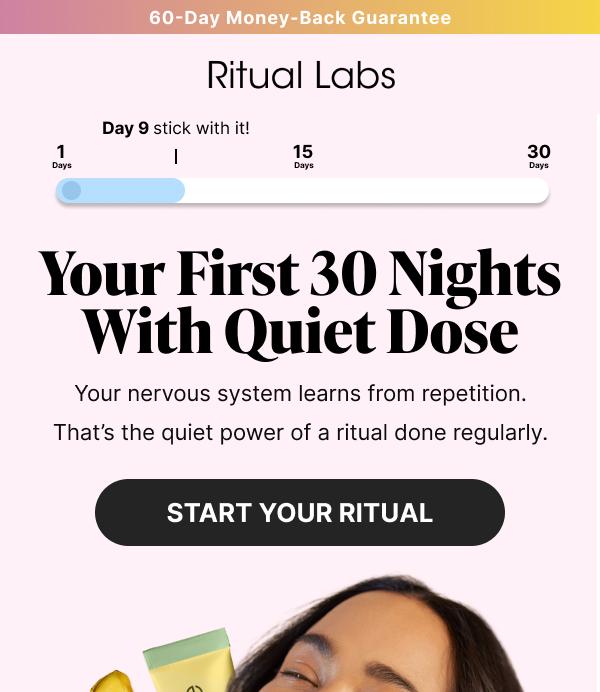

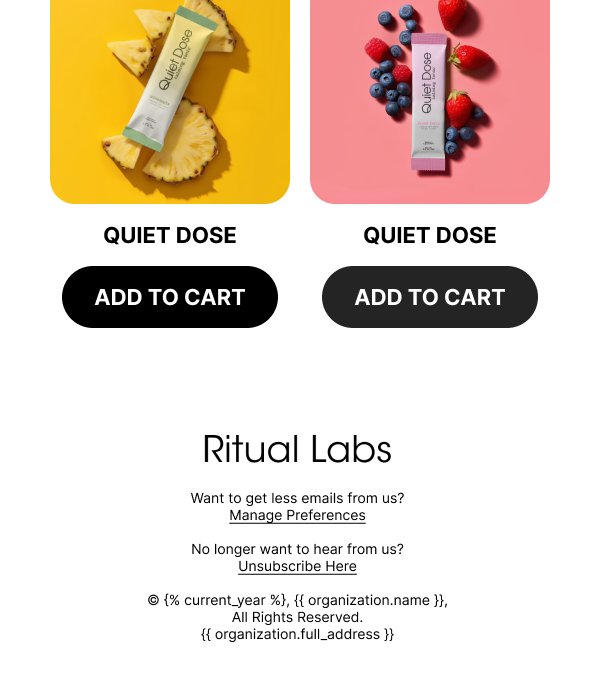
This is what that looks like in a real post-purchase email of ours.
We have broken that build down in our guide to post-purchase emails.
Trigger A Winback At Sixty Days Without A Purchase
Set this second, once the post-purchase sequence has run long enough to show you who ignored it. Sixty days with no order is where we set the trigger for most categories, because a second purchase stops being likely around there.

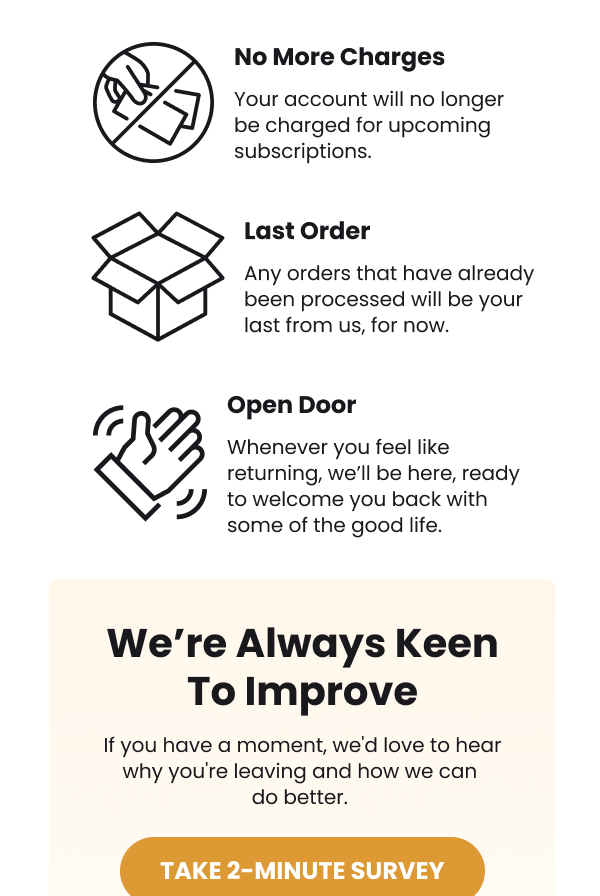

This is that same rule applied, in a real winback email we built.
Your own measurement from the first section decides this number, and it will not match the default you inherited from a template. A subscription brand lands somewhere quite different from a furniture brand.
We saw the cost of getting it wrong at Dense Hair Experts, where nothing was built for that sixty-day window. Their welcome sequence was misaligned and the upsell messaging landed far too early, so we rebuilt the foundation education first, and returning-customer revenue rose 59% inside 90 days.
Their winback had been firing on a template default, and a winback firing at the wrong moment is closer to no winback at all than to a working one.
Offer The Pairing Product Instead Of A Code
Point the second order at the product that pairs with the one they already own. That is the whole offer, and it costs you nothing in margin.
The default answer here is a standing welcome discount, and it is an expensive one. You are often paying people to buy something they had already decided to buy.
Operators name it plainly. u/cold_cannon put it this way in an r/Emailmarketing discussion on welcome discounts: "most stores are basically paying people to join their list who would've bought anyway." The cost of that never shows up in a campaign report, because the revenue still lands and the margin that funded it is not in the same column.
Worse, that discount trains the customer to wait for the next code before buying again, which raises the cost of every order after this one.
Strategies For Repeat Buyers Who Are Overdue
These customers already trust you, which makes customer retention strategies for this group cheaper to run and costlier to get wrong. Come here when your repeat rate reads healthy but revenue has stalled anyway.
Time A Replenishment Reminder To The Product's Cycle
Replenishment timing comes from the product's own consumption cycle. A flat sixty days, as the previous section used, does not transfer here. A 30-day supplement and a 90-day skincare set need different delays out of the same flow, so one global delay is wrong for most of your list.
An early reminder reads as pushy, and a late one lands after they have already bought elsewhere. Work the cycle out from your own order data. The interval you measured earlier is the honest version, and the pack label is a marketing estimate. Our guide to how often you should email covers how this interacts with your campaign calendar.
For a product bought once a year, this flow plus a genuine cross-sell is usually the entire program worth building.
Cross-Sell The Product They Have Not Tried
A regular buyer who orders the same item repeatedly is the easiest cross-sell in the account, and a generic bestsellers block wastes it.
Point them at what pairs with their own order history. This is the one thing a repeat buyer gives you that a one-time buyer cannot: enough purchases to tell a pattern from a single choice, which is the same signal a winback flow reads when it decides who is worth recovering.
Test A Loyalty Lever Before You Buy A Loyalty Platform
Leave this until last, and test it before you buy anything. Replicate the lever you are considering inside the email or CDP platform you already own, run it for three to six months, and compare the people who got it against the people who did not.
The test exists because the evidence on loyalty programs is weaker than the budgets they command. A Journal of Marketing study on the long-term impact of loyalty programs records that heavy buyers claimed their rewards readily.
Our own reason for wanting a control group is narrower. The customers most likely to enrol in a program are the ones who were already coming back, so without a holdout you cannot tell enrolment from loyalty.
At a once-a-year purchase frequency a loyalty program almost certainly will not pay for itself.
Prove It Made Money At The Customer Level
Take the same two numbers from the first section and read them again, this time sliced by the cohort you worked on. Nothing new to calculate, and a different question being asked.
Read The Repeat Rate By Cohort Rather Than By Campaign
Your flow report will tell you the winback earned revenue. It cannot tell you whether the customers in that cohort came back sooner than the cohort before them, which is the only version of the question that matters here.
Take the first-order cohort from the month you switched the work on, and compare its repeat purchase rate against the same month a year earlier. Campaign and flow attribution credits the send; a cohort read credits the customer, and the two diverge most when a discount was involved.
Movement usually appears within a fortnight, because the post-purchase change reaches customers already inside your buying cycle and does not wait on new traffic.
Sixty Days Is The Window That Tells You Early
The sixty-day figure reports before revenue does. That is what makes it worth watching while the work is still new.
Compounding takes a full reorder cycle, so a category whose median interval is sixty days shows its real number at around ninety, once a second cohort has had time to come back. Judge it earlier than that and you are reading noise.
Find Which Step Your Account Is Missing
Reading a sequence is the easy part. Working out which part your own account is missing takes somebody inside your Klaviyo, and we do that inspection for free.
That is what our free Klaviyo audit does. It reads your flows, segments and campaign performance, then names which of these customer retention strategies your account is missing and what the absence is costing you. If your post-purchase flow is one email and a discount code, that is the first thing it will flag.
For clients wanting the build afterwards, the work follows our 8-Week ROI Timeline, with foundation landing in week one and a retention engine running by week eight.
Those eight weeks run in the same order this article has just described, which is why the audit comes before the build.