Why durable products need a different retention plan
A bag, a sofa or a drill has no reorder date, so the replenishment flow that drives repeat revenue for supplements or pet food has nothing to time against. Customers may go years before they need the same product again, and some never will.
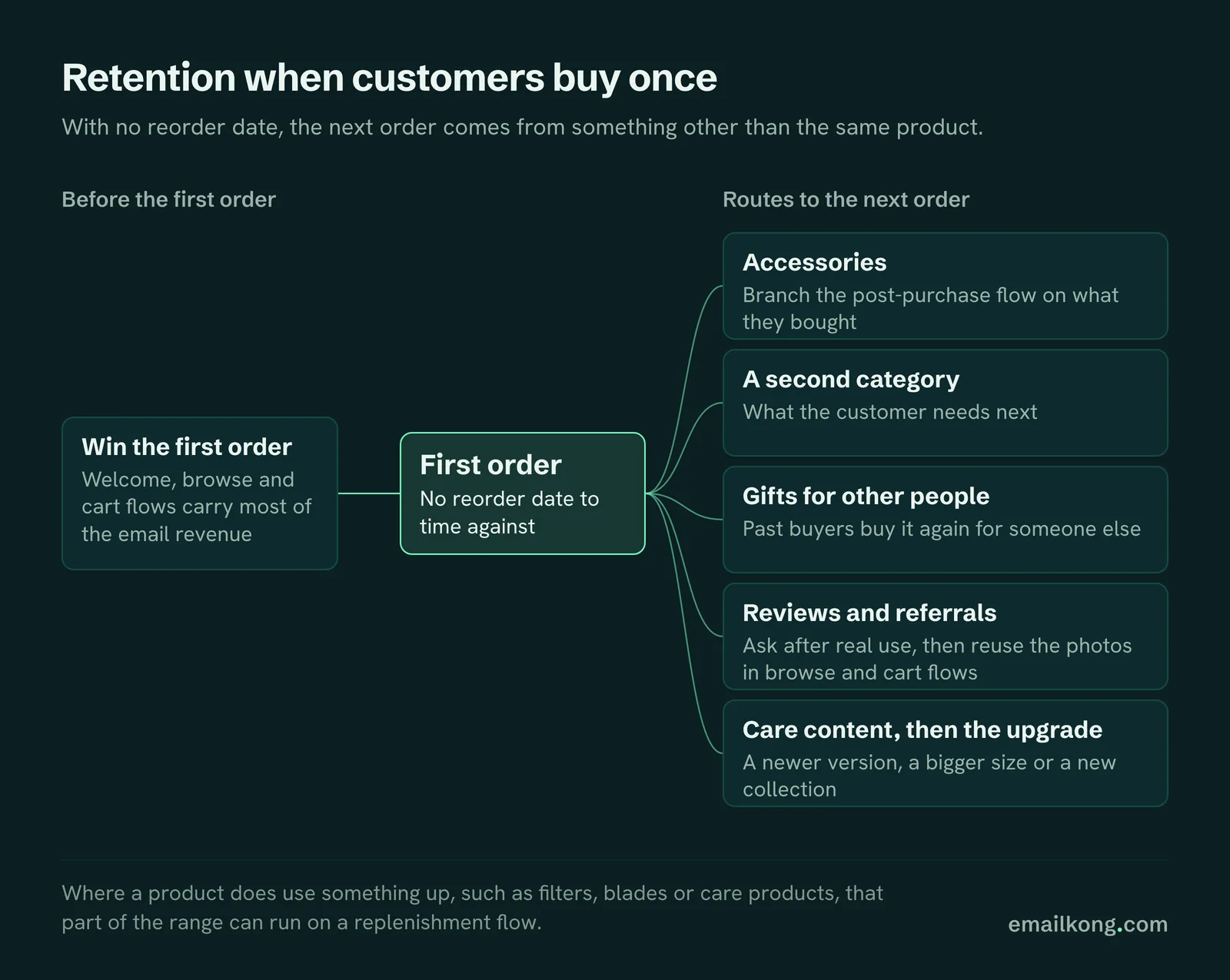
That changes where the work goes in Klaviyo:
- Most of the list has not bought yet. Welcome, browse and cart flows carry more of the revenue than they do for a consumable brand.
- The second order comes from a different product. Post-purchase flows sell what goes with the first item, then what the customer needs next.
- Buyers bring in new buyers. Reviews, photos, referrals and gifts reach people your ads miss.
Win the first order with abandonment and browse flows
For products bought once, the flows that convert first-time visitors are where most of the email revenue sits. Durable products cost more and last longer, so shoppers compare, leave and come back, and every return visit is a chance for a browse or cart email to answer what stopped them.
The questions that stop these orders are practical: will it fit, what is it made of, how long will it last, when will it arrive and what happens if it is wrong. We answer them in the flows using only what the product page and the brand state:
- Dimensions and fit. Size against something the shopper knows, taken from the product page.
- Materials and build. What it is made of and how it is finished.
- Reviews and photos in real use. A bag packed for a trip or a piece of furniture in a real room does more than a studio shot.
- Warranty, delivery and returns. Stated plainly, near the button.
A welcome series for a durable brand can spend its early emails on proof and product detail while the shopper is still deciding, with the first offer saved for the end of the series.
Sell accessories and a second category
The easiest second order is something that goes with the first. Branch the post-purchase flow on what the customer bought, then show the accessories, add-ons and related products that customers of that item tend to need.
This is the map we start from, adapted to each catalogue:
| What they bought | Likely next order | When to send |
|---|---|---|
| Travel bag or luggage | Packing organisers, a smaller day bag, a second size | After delivery, then before holiday travel seasons |
| Sofa or large furniture | Matching pieces, cushions, covers, care products | 2-4 weeks after delivery, once the piece is in place |
| Home decor or architectural pieces | Pieces from the same collection for the next room or project | Around new collection launches and project seasons |
| Power tool | Blades, batteries, attachments, a second tool from the same range | After delivery, then when parts usually need replacing |
| Kitchen or home appliance | Accessories, spare parts, consumables it uses | When the first consumable is likely to run low |
| Outerwear or footwear | Care products, a second colour, the matching item | At the start of the next season |
Where the product does use something up, such as filters, blades or care products, that part of the range can run on a replenishment flow even when the main product never repeats.
Turn buyers into reviewers, referrers and gift-givers
Customers who bought a durable product once can bring in your next customers through reviews, photos, referrals and gifts. Ask for the review after they have used it, such as after a first trip for a bag or a few weeks of use for furniture, so the review describes real use.
Photos from those reviews then go back into the browse and cart flows, where they answer the questions new shoppers have. A referral offer in the post-purchase flow works well for products people talk about, and gifting campaigns before the holidays give past buyers a reason to buy the same product for someone else, because they already trust it.
Send care content and plan for the upgrade
Care emails keep the product working and the brand in the inbox between purchases. Send cleaning, storage and maintenance tips matched to the material, and invite customers to register the warranty, which also gives you the purchase date to plan later emails.
Save the order date and product as Klaviyo properties so you can plan the upgrade. A newer version, a bigger size for longer trips or a new collection for the next room gives a past buyer a reason to return. Campaigns about new launches go to past buyers first, since they already know the quality.
EK proof
- TwoPackBag (travel bags): $1.38M in flow revenue in 90 days. Klaviyo's share of store revenue went from 17.3% in our first 90 days to 23.7% in the latest 90 days, and email revenue was 3.9x higher across the same 2 periods.
- White River (architectural mouldings, trim and woodcarvings): 33% attributed revenue from Klaviyo, a 17% increase in returning customer revenue and a 5.5x increase in post-purchase flow revenue. Their campaigns are editorial, and each email starts with a design idea and ends at a product recommendation. Read the case study.