
Some people don’t have the time to check their emails regularly but I guarantee you they will have a cellphone with them. You are much more likely to generate a conversion from these prospects by sending an SMS.
One thing to understand is that automated flows are much more than simple message sequencing. They allow you to tailor communication preferences based on the recipient's taste.
In this guide we’re going to explain how our email marketing agency builds SMS strategies for our clients and how we integrate SMS into existing flows.
Let’s get started.
Build The Welcome And Cart Texts Before Anything Else
Automated flows are where the money is. Per Klaviyo's own SMS benchmarks, flows account for well under a tenth of all sends and drive close to half of total SMS revenue. Measured per recipient, the difference is wider still. A flow earns roughly eight times what a campaign earns, and Klaviyo's data puts flow click rates near 10% against about half that for campaigns.
A third figure in that benchmark set is the one worth pausing on. Nearly two-thirds of SMS flow revenue comes from new buyers, against roughly a fifth for campaigns. Texting is widely deployed for retention while its flows are doing acquisition work, which is an argument for building the flows that catch new buyers before anything aimed at existing ones.
Klaviyo now names which four flows it benchmarks you against: welcome, browse abandonment, cart abandonment and winback, scored across 196,000 brands. Two of those are where we start.
The Welcome Text Sent Within Minutes Of Signup
Send it while the person is still on the site. They've just handed over a phone number and their attention will never be higher, and waiting until the next morning means an unexpected text from a brand they have half forgotten.
Keep it to one job. Confirm what they signed up for, deliver whatever the popup promised, and give them a single link.

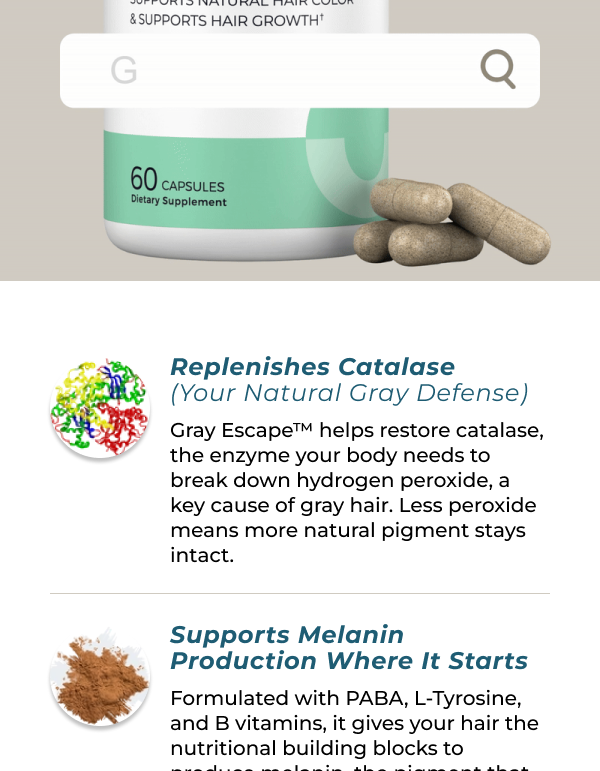
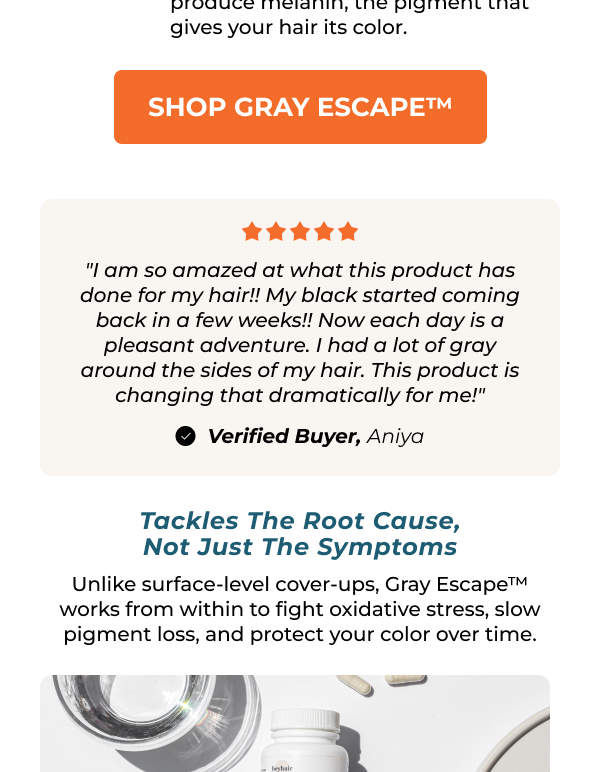
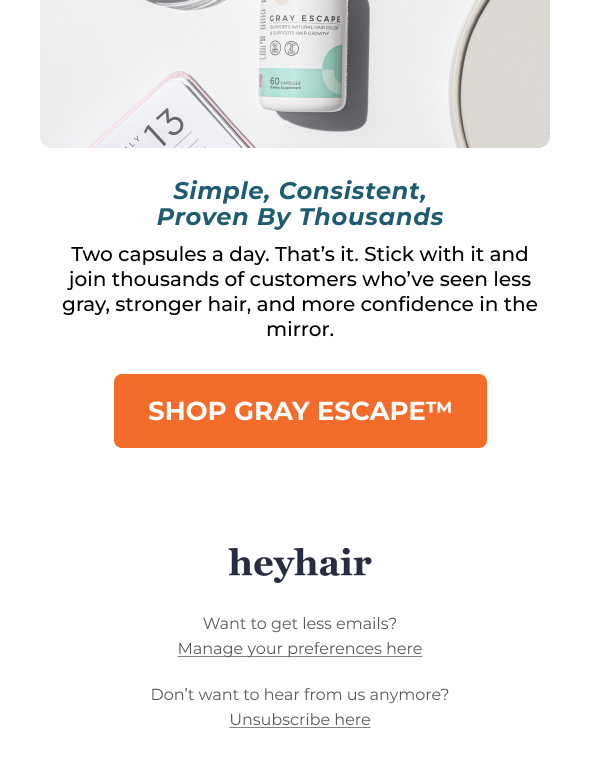
This is the email half of that same signup, from a real welcome flow of ours, carrying the brand story the text is told to leave alone.
If your email welcome flow runs a five-part brand story, resist copying it here. Your text confirms the signup and hands over the code, and your email introduces the brand.
The Cart Text Sent At Thirty Minutes
Cart texts go earlier than their email counterpart, and that's the whole reason they work. An abandoned cart email typically waits an hour, then competes with everything else in an inbox.

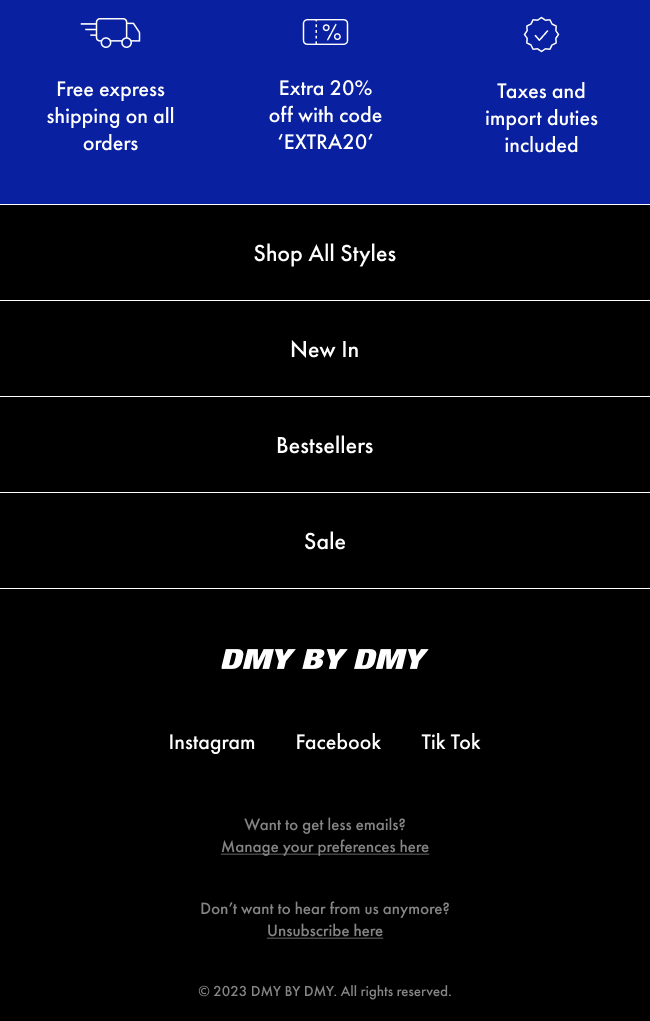
This is its email counterpart from a real cart flow we built, the one that waits an hour while the text goes at thirty minutes.
A text at thirty minutes reaches someone who hasn't yet left the sofa, which is the whole window you're buying, and it should name what was left behind and nothing else. We have written separately about the email side of that flow.
Do not assume a templated flow arrived configured correctly. One merchant three years into their platform described a third support conversation over wrong winback triggers in a public review. Triggers are the work, and they are the first thing we open on a new account.
Attach A Picture Only When It Sells The Product
An image costs more to send than plain text, so the only question is whether the picture earns its cost. Send one when the product is the argument, which for most brands means apparel, homeware and anything a buyer wants to see before tapping. Use plain text for a reminder or a receipt.
This format question is about to get bigger. Klaviyo added video to text messages and launched RCS for business in the same month, and RCS is running far above the 4-7% click-through rate SMS gets. None of that changes what you build this quarter.
Keep Each Message Under 160 Characters
A text is billed in 160-character segments. One segment holds 160 characters, two hold 306 and three hold 459. Every extra segment is charged as another send, so a message one character over the limit costs twice what it would have cost.
Nothing on the phone shows you where that boundary fell, because segments arrive stitched together as one continuous message while the billing counts them separately. A flow can therefore run for months at double cost with nothing in the conversation looking wrong.
Write the welcome and the cart text to the first segment, and check the count before either goes live. Those two flows fire on every signup and every abandoned cart, which is where a doubled unit cost compounds fastest.
Get The Number Registered And The Consent On Record
Everything in this section is United States specific. The build order in this article holds anywhere, but registration, quiet hours and the consent framework below all need local equivalents outside the US.
Those two flows can't deliver a single message until the number behind them is registered, and the consent record you keep is what decides whether a revocation complaint costs you nothing or five hundred dollars a message.
Register Your Sending Number With The Carriers
Per the 10DLC compliance guidance, every major US carrier stopped delivering unregistered A2P business SMS in February 2025. Not throttled, blocked. Registration also sets how fast you can send once approved, because higher 10DLC trust scores permit higher message throughput. The score behaves like a credit rating for your sending number.
Start it the week you decide to do SMS. One store reported being charged while still unapproved, saying in a public review that the app would not approve them and then charged for services never used.
Keep The Consent Record You Cannot Backfill
An email address isn't permission to text. Consent has to be recorded for SMS specifically, and it cannot be backfilled later, because that record is your defense if anyone asks.
Consent rules moved twice inside eighteen months, so most operators are running on an old mental model. Industry lawyers spent a year preparing for a one-to-one consent rule that an appeals court struck down, and that the FCC formally eliminated eight months after that. The Do Not Call registry now covers texts as well, so your list needs a scrub that email never required.
Wire Up STOP Handling Before The First Send
Consumers may revoke consent to robotexts in any reasonable manner, under rules in force since April 2025. You can't insist on one magic word. Stop, quit, cancel and unsubscribe all count. So does a plain sentence asking you to stop. You then have ten business days to action it.
Set this up before your first message goes out. Fransis's state-by-state text-marketing reference prices the exposure: TCPA violations carry statutory damages of five hundred dollars per message for a standard violation and fifteen hundred for a willful one, with no aggregate cap.
Read that per message. A consent mistake applied across a list is priced by the size of the list.
Grow The List From Your Popup And Checkout
An SMS marketing strategy only needs a list once the flows exist, and two live flows mean subscribers finally have somewhere to land. Growing a list before those flows exist is how brands end up holding forty thousand phone numbers and one campaign a month.
Put The Phone Field On Step Two Of The Popup
Asking for an email address and a phone number in one breath costs you both. A phone field raises the perceived cost of the form at the moment someone decides whether to bother, and your email capture rate pays for that. Split the form instead. Take the email address on step one and commit it, then ask for the phone number on step two with its own small reason to hand it over.
This matters financially in a way that is easy to miss, because every profile you hold carries a standing monthly cost. One Swedish store reported its monthly price going from eighty dollars to a hundred and fifty in a single year.
Take Phone Consent As Its Own Opt-In
The phone step needs its own opt-in language. Permission inherited from the email signup above it doesn't carry. Consent to email is not consent to text and it cannot be inferred from a purchase, so a number captured without its own tick is a number you cannot legally use.
That is the difference between a list and a liability. Build the opt-in into step two and the record from the previous section writes itself.
Capture Numbers Again At Checkout
Your checkout is the cheapest opt-in you own. A customer is already typing their details and has already decided to trust you with money. With that trust established, a shipping-updates opt-in reads as a useful service. It also produces a better subscriber than a popup does, because they've bought something, which makes them the right audience for your post-purchase work.
Run A Weekly Calendar Alongside Email
The calendar is the part of an SMS marketing strategy that never finishes, and it comes last because it needs the other three parts in place. With a registered number, two live flows and a growing list, a weekly schedule has something to run on.
Text The Last 90 Days Of Buyers And Browsers
Your email segments don't transfer. Email tolerates a wide audience because the marginal send costs almost nothing, while every text you send has a real unit cost behind it. A segment has to earn its send cost every time. Start with people who bought or browsed in the last 90 days, and let the rest stay on email until they do something.
Maintaining that's easier than it used to be, because Klaviyo shipped natural-language segment building in July 2026. Fiddliness has stopped being a reason to send to everyone.
Give Email And SMS Separate Days Of The Week
One person getting an email and a text about the same sale on the same morning reads as desperation, and it costs you both channels at once. Give each channel its own days and let flows run underneath as they trigger.
Those days are constrained by law as well as by judgment. Federal quiet hours run 8am to 9pm in the recipient's local time. Enzo maintains a state-by-state compliance reference, and it puts Florida, Oklahoma and Washington at 8am to 8pm, an hour stricter than the federal cap. The Oklahoma statute also caps contacts at three per 24 hours on the same subject.
That matters more than a compliance footnote suggests, because it gets litigated in volume: one Florida firm has passed 480 quiet-hours filings and demand letters. A calendar built on federal hours alone will schedule sends that are legal for most of your list and grounds for a claim in three states.
There is one piece of good news with an expiry date on it. The FCC issued a second extension order on 6 January 2026, delaying the cross-message rule to 31 January 2027. Until then a STOP text does not have to suppress that person's email, and after then it will.
Sharing one suppression logic across both channels now is cheaper than retrofitting it in 2027. Running both as one program is also where compounding shows up: we rebuilt KittySpout's program as their customer base grew from 10,000 to over 500,000, planning email, SMS, WhatsApp and direct mail as one schedule, and returning-customer revenue rose 146%.
Watch Revenue Per Recipient And Unsubscribe Rate Every Week
Two numbers are enough to run this weekly. Revenue per recipient tells you what the channel is worth, because it normalizes for list size and folds in order value. Ecommerce SMS programs average $0.71 revenue per send in 2026, with the top quartile reaching $1.46. Measure yourself inside that range, because where you land is decided by how well the earlier parts were built.
Unsubscribe rate is the less forgiving one, and it tells you whether your cadence is sustainable. The same benchmark report puts opt-outs below 3.5% per send across ecommerce, with well-run programs between zero and 1.5%.
Where A Klaviyo Partner Fits Into This
Of the four parts of an SMS marketing strategy above, the one we find broken most often is the last. Registration gets done and flows get built, and then the two calendars are never reconciled with each other. We check that reconciliation first.
Email Kong's free Klaviyo audit covers flow performance across welcome, abandoned cart and post-purchase.
It also reads your SMS and email coordination alongside opt-in conversion, and reports which of the four parts is costing you money. Reconciliation only works when both channels run in one platform, which is the case for Klaviyo as your CRM over a separate SMS tool carrying its own suppression list.
We would argue reconciliation is what moves the number fastest on most accounts. Our 8-Week ROI Timeline runs Foundation in week 1 at 2-3x ROI, First Wins in week 2 at 4-5x, and a full retention engine by week 8.