
What makes welcome emails unique is that they’re usually the first direct communication your brand has with a specific customer. The wrong first impression could cost you a loyal customer.
If you’re looking for a guide on the best practices to build welcome email sequences you’ve landed in the right place.
Our Klaviyo email marketing agency has created welcome sequences for the 160+ DTC brands that we work with. We’ve tested repeatedly and know what gets the best results. The rest of this guide shares that learnt knowledge with you below.
Deliver What The Sign-Up Form Promised
Your form made an offer, whether that was ten percent off, early access or a size guide. Whichever it was, that promise is now a debt, and the first email's only job is to settle it before it asks for anything.

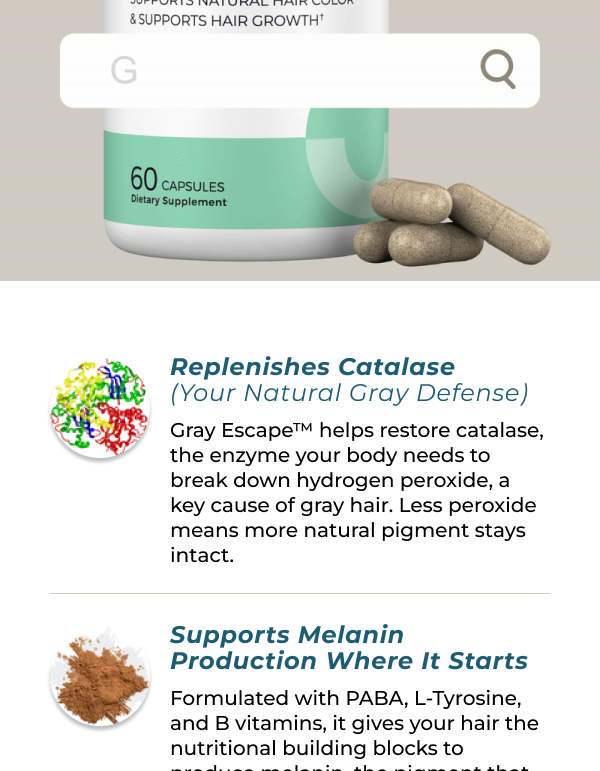
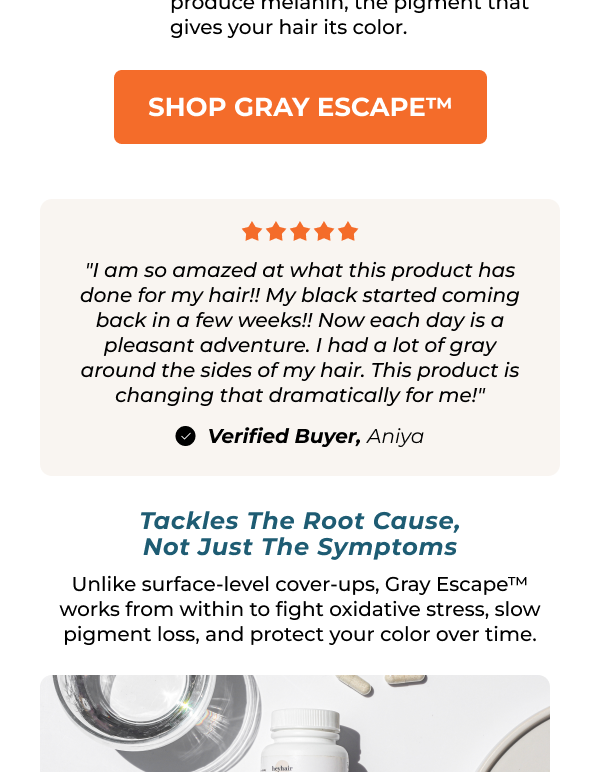
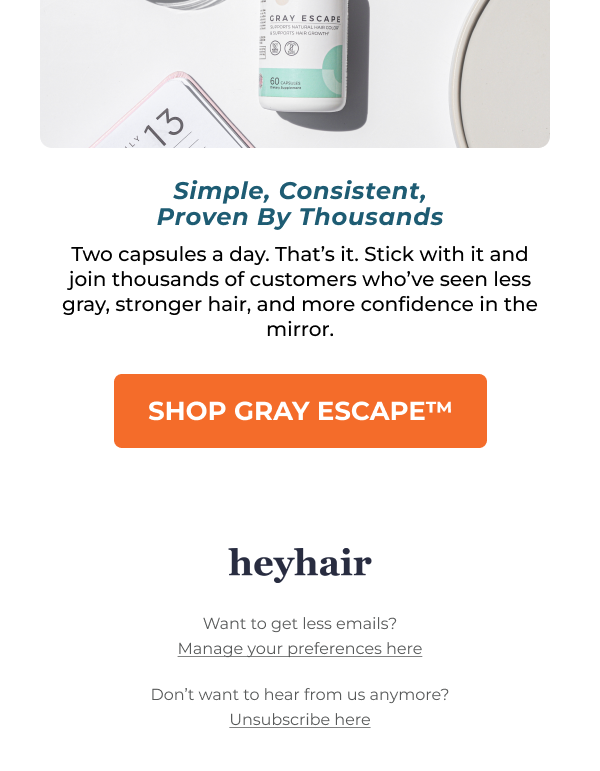
This is what that looks like in a real welcome email of ours.
Put The Incentive In The Email's First Line
This email exists to hand the promise over, so put it in the first thing the reader's eye lands on, above anything they would have to scroll past. Obvious enough, until you read a few of them. Plenty open with a paragraph about the founder and bury the code down by the footer.
Your subscriber came for the thing you promised them, so hand it over first and talk afterwards. If that promise was a code, put the code itself in the email. A button leading to a page that reveals it is one more step where you lose them.
Decide Whether The Promise Should Be A Discount At All
Here is where we push back on the default.
A flat percentage for every new visitor captures well. It also teaches people to wait for a coupon, and it costs you list quality as well as margin. You have given ground before learning whether that person had any intent.
Operators are noticing. Running segmented offer tests on a fashion brand, u/pudkovah set the problem out in r/Emailmarketing more precisely than most vendor documentation manages: "A lot of stores still default to the same 10-15% off for every new visitor. It works for capture, sure, but it also seems to train people to wait for the discount."
Their answer was to give the discount only where it was needed. That protected margin and list quality at the same time. Gamification compensated for the smaller offer. Klaviyo's own sign-up form guidance makes the same trade, reporting brands that swapped a flat discount for a spin-to-win mechanic and raised their sign-up rate doing it.
A free shipping threshold is the other version worth testing. Say the threshold in the email and link to a collection where hitting it is realistic, because a threshold lifts average order value while a percentage code only reduces it.
Our own client work points the same way. Take the account we inherited at Dense Hair Experts. It had real clinical credibility but no retention system aligned to a slow, skeptical buying journey. We rebuilt the sequence around education first, and returning-customer revenue rose 59% inside 90 days.
That is not an argument for never discounting. It means you decide the offer deliberately, knowing what it costs you.
Say What Is Coming Next And Ask For One Click
Say what you send and roughly how often. Two sentences will do, it costs nothing to set, and skipping it is why people leave in week two. Somebody who signed up for a code and then gets four emails a week did not get what they expected.
Then ask for one thing. Not a primary and a secondary, and certainly not four category tiles above a row of social icons all competing for the same click. Beyond delivering the promise this email has a single job, and splitting attention across several asks reliably reduces how many people complete any of them.
If you are unsure what to promise on frequency, we have written separately on how often to send once you count your flows.
Klaviyo Prescribes Three Emails Across The First Week
The length is not a matter of taste. Klaviyo's own welcome series documentation settles it, and the three-email ceiling exists because of who is on the receiving end of a welcome sequence.
Send The First Email Immediately And Space The Next Two
The documentation prescribes three sends: the first immediately, the second after three days, the third after four.
That first one has to fire on the trigger. It runs on the subscribe event, so it can arrive while the reader is still browsing the page they signed up on. They know exactly who you are, because they asked for this about thirty seconds ago.
Every account we run sends it that way. No campaign you schedule for a Tuesday morning will ever arrive with that much context behind it.
A Resubscriber Never Triggers The Flow Again
Someone can only receive messages in a list-triggered flow once, which means a subscriber who unsubscribes and later signs up again never re-enters the welcome sequence. They get nothing at all.
Welcoming a returning subscriber back therefore needs its own separate flow, triggered on a re-subscribe event, since the list membership is already there. Build it or accept the silence, but know which you have chosen.
Three Is A Cap Because These Addresses Have Never Engaged
Every other flow in your account sends to people with some history behind them. This one sends to an address that has never engaged with you at all, and the count is a ceiling for that reason.
Klaviyo warns that sending too often to unengaged profiles hurts sender reputation, while sending too infrequently to engaged customers leaves money on the table. The welcome sequence sits on the wrong side of that trade by construction.
Complaints and unsubscribes are what mailbox providers watch. Google tells bulk senders to keep spam rates below 0.10% and never to reach 0.30%, which makes a welcome email sent to coupon-harvested addresses the one most likely to move the number. Klaviyo's own guidance on the sunset flow makes the same point from the other end, warning that sending to unmonitored inboxes will hurt your deliverability over time.
Laura Atkins has worked in email deliverability since 2000 and co-founded the consultancy Word to the Wise in 2001. She has made the underlying point for years.
"Permission is still the key to getting mail to the inbox. In fact, permission is more important than getting all the technical bits right. If you have permission you can play a little fast and loose with the technical stuff. If you have the technical stuff right you still need permission."
Klaviyo states it is best practice for new subscribers to confirm their address on first opt-in, which filters out the mistyped and the disposable before you mail them. Get that wrong and the welcome send sets the inbox placement your whole list inherits.
Exclude Anyone Who Buys While The Sequence Is Running
There is a mechanical trap in every welcome email sequence, and it catches a lot of the accounts we take on.
A Purchase Does Not Remove Anybody From A Welcome Sequence
A purchase does not remove anybody from a welcome sequence. Klaviyo's flows trigger on list membership, so a customer who buys ten minutes after subscribing keeps getting acquisition messaging for the rest of the week.
You discount a customer who did not need discounting, and you send trust-building copy to somebody who already trusted you enough to hand over money.
The Conditional Split That Removes A Buyer
The fix is one documented condition. Klaviyo's welcome series guide specifies a conditional split on "Has Placed Order at least once since starting this flow", which removes a buyer from the acquisition sequence before the next message goes out.
Note what that condition is measured over. It counts only orders placed since the flow started. A returning customer who has not bought on this visit still receives the sequence as intended.
Getting them out of the sequence is only half of it. A buyer who drops out of the welcome sequence needs somewhere to land, and that is what a post-purchase flow is for. Build that before you add the split, or you will have stopped the wrong messages without starting the right ones.
A New Subscriber And A New Customer Need Different Things
Nearly 100 audited B2C accounts put a number on how often this goes wrong. According to Klaviyo's own digital strategy team, the commonest problem in that set was one welcome experience sent to everybody who signed up, buyers included.
What they describe is a waste with two halves running at the same time, and their summary is the line worth keeping. A new subscriber and a new customer need different things.
How To Tell If Your Welcome Email Is Working
Revenue is the slowest place to look, and the number most people judge a welcome email on stopped meaning anything several years ago.
Judge The Sequence On Revenue Per Recipient
Revenue per recipient survives list-size changes and answers the only question that matters. Judging a welcome flow on open rate rewards the subject line and tells you nothing about whether the flow earned anything.
Track it against your own baseline. Your figure from last quarter beats somebody else's average every time.
Watch the unsubscribe rate alongside it. Revenue per recipient rising while unsubscribes climb means you are buying revenue with list health, and that catches up with you. If you want a fuller read across the account, our guide to auditing email performance covers the rest of the numbers.
The Real Numbers Against The Circulating Claims
Two published datasets measure this differently, and knowing which denominator you are reading is what stops you setting the wrong target.
Omnisend analyzed more than 20 billion campaign emails and 470 million automated sends across 27,000 brands, and puts the welcome send at $6.16 per email with a 35.53% open rate. In the same research, abandoned cart, welcome and browse abandonment together accounted for 87% of all automated orders.
Welcome sends also grew 2.5 times year on year in that dataset. The benchmark you are measuring against is therefore being set by a pool of senders that is still growing, so treat it as a moving figure.
Klaviyo's benchmark reporting measures per recipient instead, and puts welcome at $2.65 against abandoned cart at $3.65, all flows at $1.94, browse abandonment at $1.07 and post-purchase at $0.41. Read down that list and the welcome send is worth roughly six times a post-purchase one, which is the comparison that decides where a rebuild starts.
Klaviyo's table is the one that ranks the flows against each other, and it puts welcome behind abandoned cart. This is a strong flow, and it is not the strongest one. Figures several times higher than a campaign circulate widely without a primary source behind them.
Apple Downloads Your Tracking Pixel Whether Or Not Anyone Reads
Open tracking works by loading a tiny invisible image and counting the load as an open.
That stopped working once Apple intervened. On iPhone, Mail Privacy Protection downloads remote content in the background regardless of whether the recipient engages, which prevents senders from tracking when messages are opened. A large share of your reported opens are therefore Apple, not people.
The number still moves. It just no longer measures what its name says it measures. We manage welcome performance on revenue for that reason.
Flows Analyst Scores The Flow But Cannot Say Why
Klaviyo shipped Flows Analyst on 4 August 2026, and it audits your welcome, browse abandonment, cart abandonment and winback flows against top-performing benchmarks drawn from 196,000 brands.
That removes a real chunk of work from anybody running this check quarterly, because the comparison you used to assemble by hand now turns up on its own. A benchmark drawn from that many accounts is also wide enough that your own figure sitting below it means something.
What it cannot do is tell you why. A benchmark diff tells you a number is low. It cannot tell you the number is low because the offer is training people to wait for a coupon, nor will it spot that buyers are still sitting in the sequence being sold to. Those are judgements about your offer and your customers, and somebody still has to make them.
Get Your Welcome Email Audited
Every number above is public. What is not public is the shape of your account: how often you send, what your click data looks like once bot activity is stripped out, and whether the people you are about to hand a discount to were ever going to need one.
Our free Klaviyo audit reads that for you.
It covers flow performance and where it leaks, alongside campaign open, click and attribution data. Deliverability and list hygiene come with it. So do segmentation and opt-in conversion, template design including Dark Mode rendering, and email-to-SMS coordination.
Read together, those answer whether the welcome sequence is costing you revenue or whether something else in the account is. The symptom and the cause usually sit in different flows.