What a flow is, and how it differs from a campaign
A flow is an automated series of emails or texts that Klaviyo sends when someone does something, such as signing up, starting checkout or placing an order. A campaign is a one-off send to a segment on a date you choose. Flows run every day without anyone pressing send, so they carry a large share of email revenue on most accounts.
Each flow has 4 settings that decide whether it works:
- Trigger: the event or list that starts it, such as "Started Checkout" or "Added to List".
- Filters: who is kept out, such as anyone who has already ordered.
- Re-entry: how soon the same person can go through it again.
- Timing: the delay before each message.
Most broken flows we inherit have the right emails and the wrong settings.
The core flows, in order of priority
This is the core set we build for a Shopify brand, with the starting structure we use before testing. Email counts are for first-time buyers; returning customers usually get a shorter path.
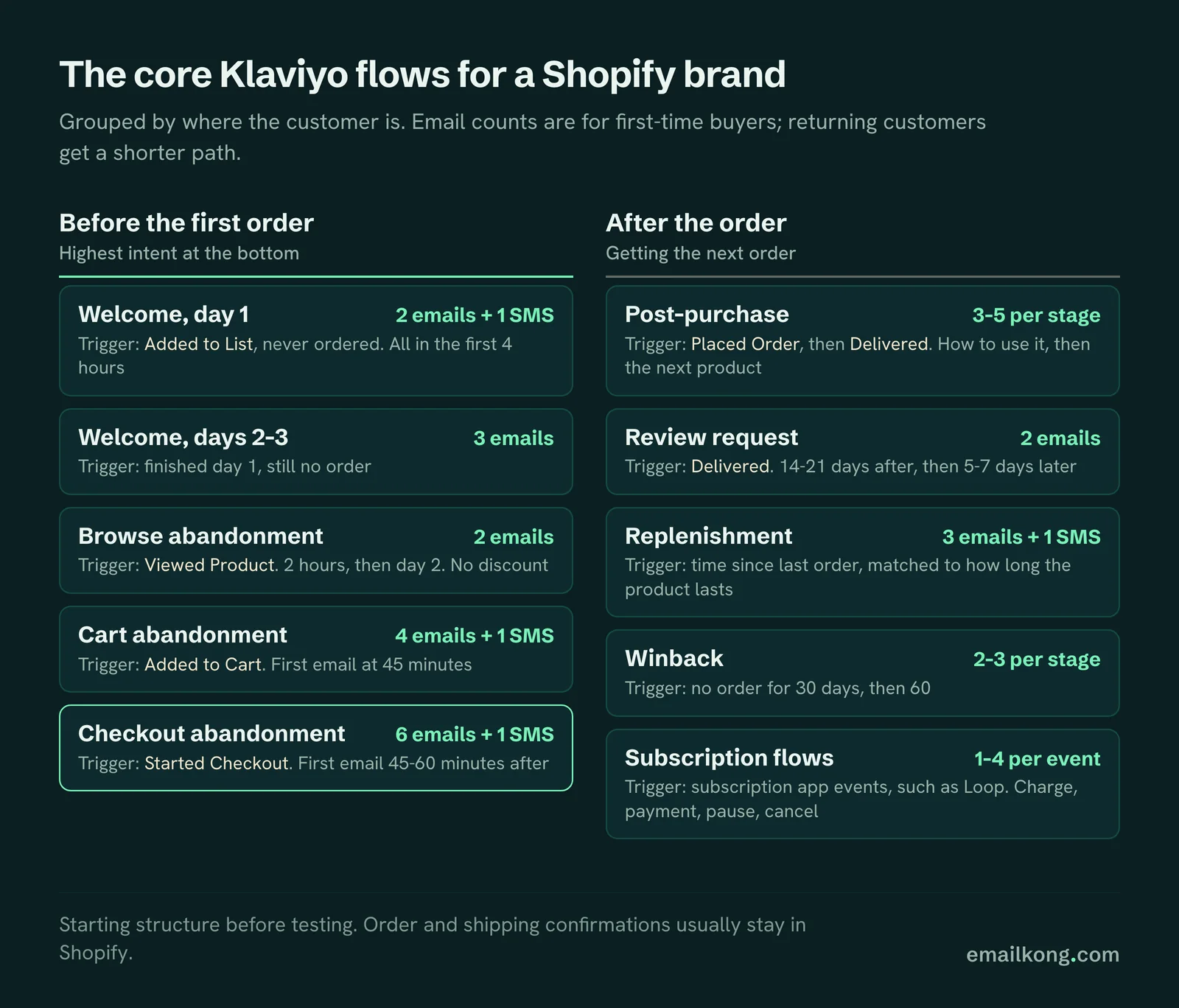
| Flow | Trigger | Emails | Timing | What it's for |
|---|---|---|---|---|
| Welcome (day 1) | Added to List, filtered to people who have never ordered | 2 emails + 1 SMS | Email at signup, SMS 2 hours later, founder email 2 hours after that | Turn a new subscriber into a first order while interest is highest |
| Welcome (days 2-3) | Completed day 1, still no order | 3 | Day 2, day 2 evening, day 3 | Reviews, bestsellers and the story behind the brand |
| Checkout abandonment | Started Checkout | 6 emails + 1 SMS (first-time), 3 (returning) | First email 45-60 minutes after, then over 3-4 days | Recover the people closest to buying |
| Cart abandonment | Added to Cart | 4 emails + 1 SMS (first-time), 3 (returning) | First email at 45 minutes, then over 3 days | Recover people who added to cart but did not reach checkout |
| Browse abandonment | Viewed Product | 2 | 2 hours, then day 2 | Remind people of the product they looked at, without a discount |
| Post-purchase | Placed Order, then Delivered | 3-5 per stage | Before delivery, on delivery, then days 1-14 after | How to use it, what to expect, then the next product |
| Winback | No order for 30 days, then 60 | 2-3 per stage, plus texts for SMS subscribers | Day 30, then day 60 | Bring back customers before they forget you |
| Replenishment | Time since last order, matched to how long the product lasts | 3 emails + 1 SMS | Around when the product runs out | Prompt the reorder, and suggest subscribing |
| Review request | Delivered | 2 | 14-21 days after delivery, then 5-7 days later | Collect reviews once the product has been used |
| Subscription flows | Subscription app events, such as Loop | 1-4 per event | Event-based | Onboarding, upcoming charge, failed payment, pause and cancel |
Order confirmation and shipping confirmation emails usually live in Shopify notifications, not in Klaviyo. Keep them there unless you have a reason to move them, and make sure they are not duplicated.
Welcome series: put everything that matters in the first 24 hours
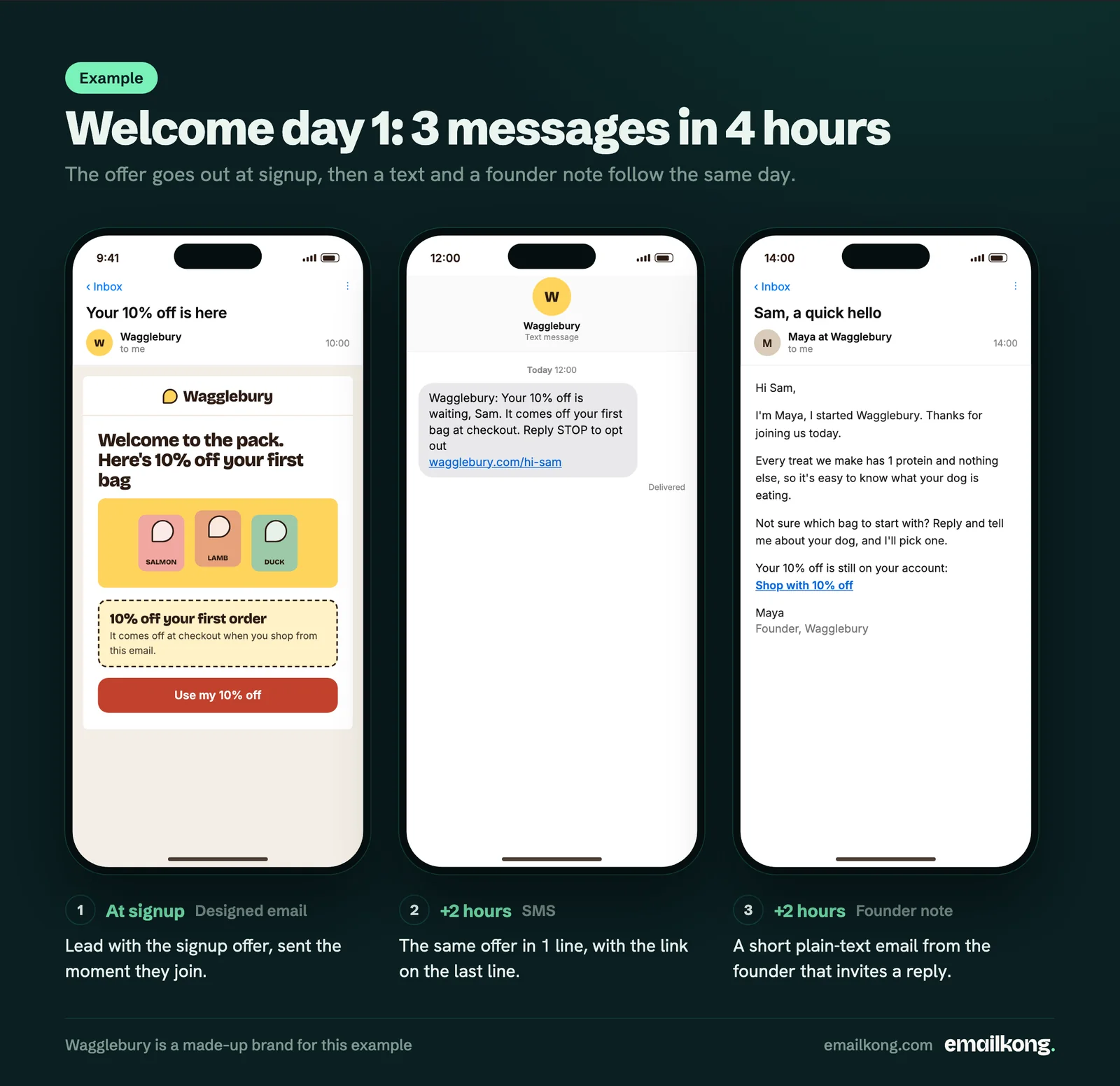
The welcome series should deliver the signup offer straight away and follow up within the same day. Interest is highest in the first few hours, and a welcome that drips 1 email every 2 days loses most of it.
Our day-1 structure is a designed email at signup that leads with the offer, a text 2 hours later that repeats the same offer, and a short plain-text email from the founder 2 hours after that. Days 2 and 3 run as a separate flow that moves from the offer to reviews, bestsellers and the brand. The trigger is the list your signup form adds people to, with a filter that removes anyone who has already ordered, and nobody goes through it twice.
Abandonment flows: split them by intent
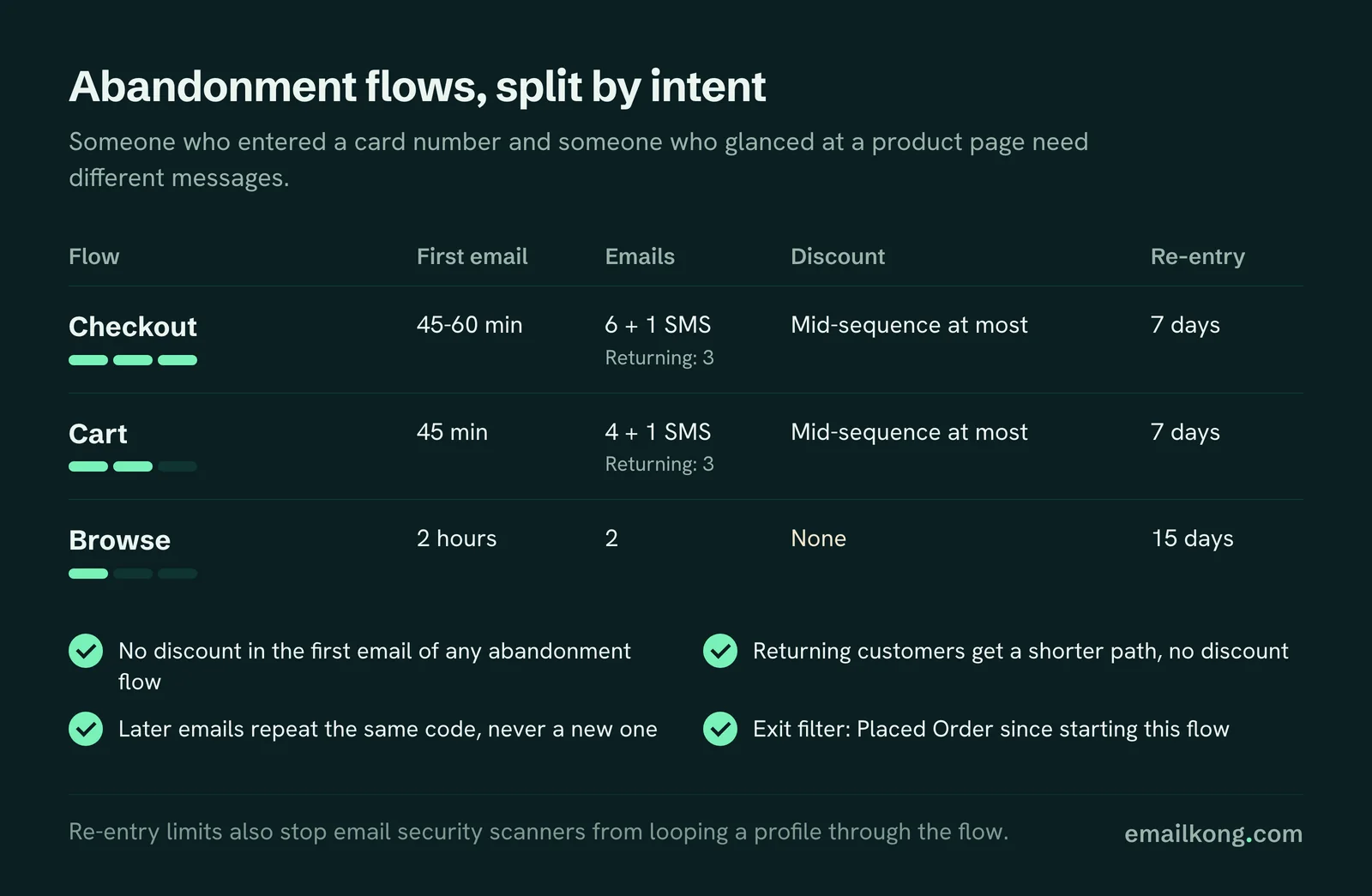
Checkout, cart, browse and site visits are 4 different levels of intent and need 4 different flows. Many accounts run 1 generic abandonment flow for all of them, which sends the same message to someone who entered a card number and someone who glanced at a product page.
How we set them up:
- No discount in the first email of any abandonment flow. If a discount appears, it comes in mid-sequence, and later emails remind people of the same code rather than adding new ones.
- First-time and returning buyers split. Returning customers get a shorter path with no discount.
- Browse abandonment stays short. 2 emails, no incentive.
- Re-entry limits. 7 days on checkout and cart abandonment, 15 days on browse abandonment, because people browse more often than they check out. A limit also stops email security scanners, which click every link, from looping a profile through the flow.
- An exit filter on "Placed Order since starting this flow", so nobody gets a reminder after they buy.
Post-purchase and winback: the flows most brands skip
Post-purchase is a set of flows between the order and the next order, and it is where we see the biggest gap on accounts we audit. Most brands send a thank-you email and nothing else.
The stages we build: an order-editing email in the first few minutes for brands with an order-editing app, so customers can add items before dispatch; a pre-delivery series that sets expectations; a post-delivery series triggered by the delivered event that covers how to use the product and then introduces the next one; and an education series at 30-60 days. For subscription brands every stage splits subscribers from one-time buyers, so subscribers are not pushed to buy things they already receive.
Winback starts at 30 days without an order and steps up at 60 days. For long-cycle products we stretch those windows to match how often people really reorder. We often frame the first winback as store credit with a specific amount rather than a generic percentage off.
Replenishment and subscription flows for consumables
If your product runs out, a replenishment flow times the reminder to when it runs out. A 30-day supply gets its first reminder a few days before day 30, and the second email suggests subscribing.
Subscribers should never get one-time reorder reminders, so the flow needs a filter that removes anyone with an active subscription. Subscription brands also need flows on the subscription app's events: a welcome to the subscription, an upcoming charge notice, failed payment recovery, pause and cancel. We cover the cancel side in our cancel flow guide and payment recovery in our failed payment guide.
What most brands get wrong
These are the issues we find most often when we audit an account:
- 1 abandonment flow doing 4 jobs, with the same message for checkout, cart and browse.
- A discount in the first email of every abandonment flow, which trains customers to abandon on purpose.
- A welcome series with no buyer filter, so people who have already ordered get a first-order discount.
- Welcome emails spread over a week instead of concentrated in the first day.
- Post-purchase that stops at "thank you."
- Flows built once and never tested. If every flow was last edited 6+ months ago and none has an A/B test, nobody is managing them.
- Live flows with 0 recipients, usually because a trigger metric stopped arriving after an app change.
We switch Smart Sending off by default on our flows, so a customer in a sale campaign still gets their checkout reminder, and control frequency with filters and re-entry limits instead. Whichever you choose, decide it on purpose for each flow.
EK proof
We build and manage flows for 140+ DTC brands as a Klaviyo Master Platinum Partner, and test them continuously: about 120 flow A/B tests were live across our accounts in October 2026. Results our clients let us publish, measured as Klaviyo's share of total store revenue:
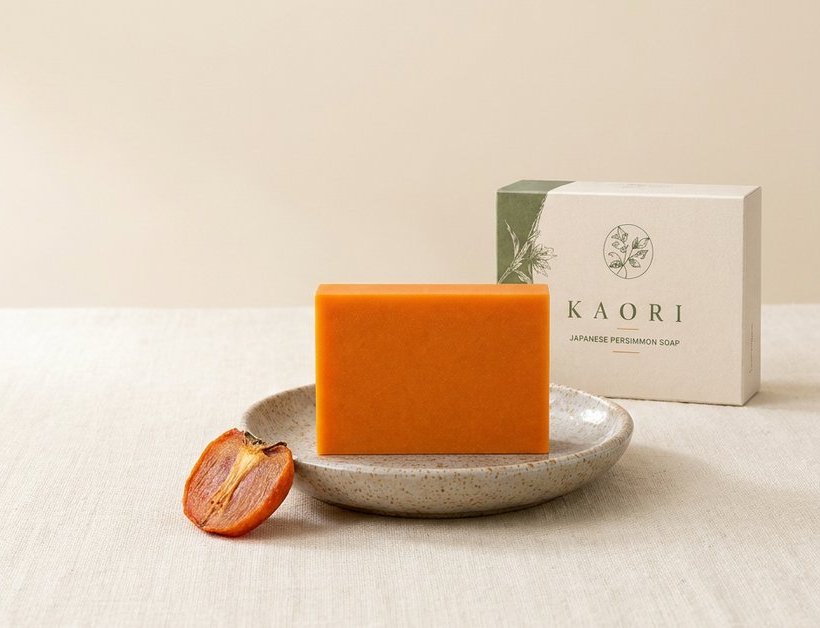
- Kaori (women's health): Klaviyo went from 3.3% to 19% of store revenue. Flow revenue grew 17.7x.
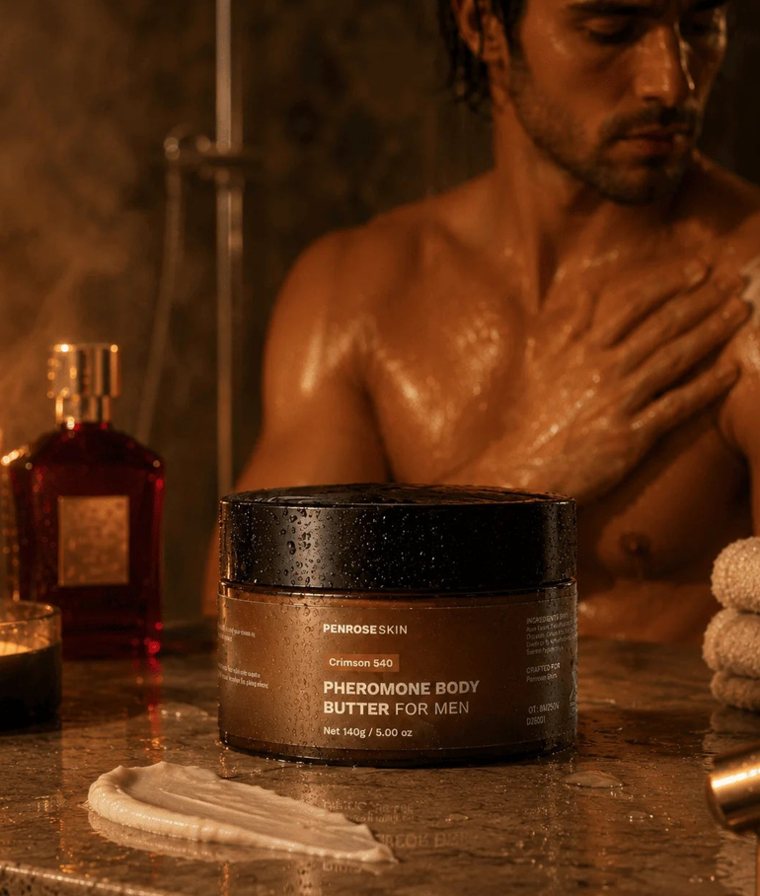
- Penrose Skin (skincare): Klaviyo's share went from 15.2% to 23.2%. Flow revenue grew 10.5x.
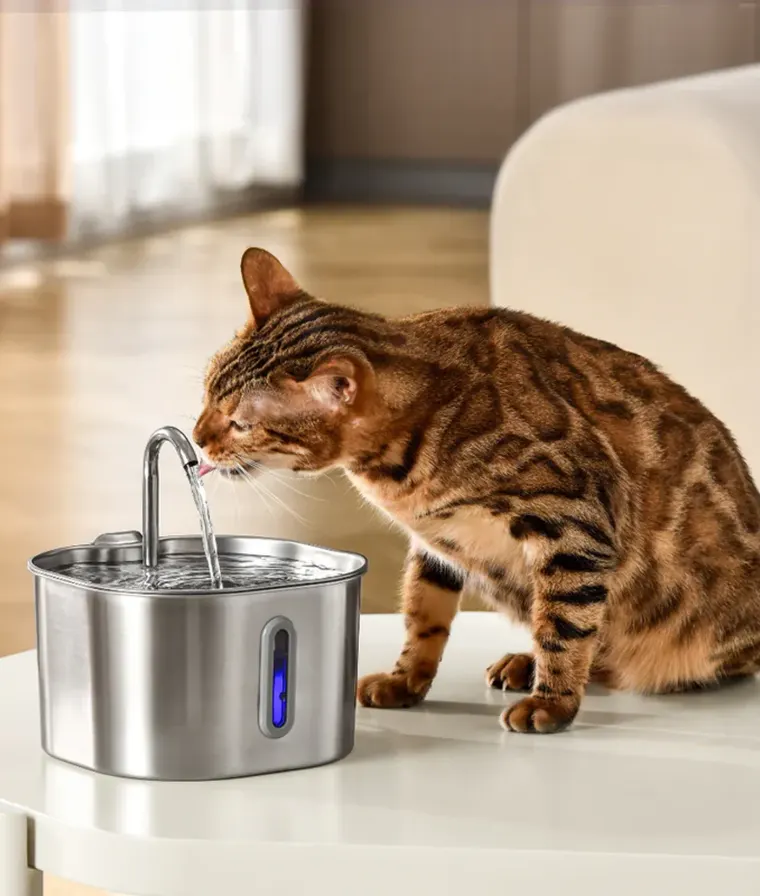
- KittySpout (pet): 46% of store revenue comes from Klaviyo.